

Overview
Diesel excavators remain the backbone of medium to heavy earthmoving operations, from road construction to mining. For B2B procurement and fleet managers, understanding real-world payload limits, emission compliance, hydraulic maintenance, and parts interchangeability directly impacts total cost of ownership. This FAQ provides data-driven answers designed to support pre-sales evaluation and post-sales maintenance planning.
Frequently Asked Questions
Q1: What is the standard maintenance interval for a diesel excavator?
The standard maintenance interval for a diesel excavator is every 250 operating hours for minor service and every 1,000 hours for major service. Minor service includes engine oil and filter change, fuel filter replacement, and greasing all pivot points. Major service (1,000 hours) adds hydraulic oil and return filter replacement, swing gearbox oil change, and valve lash adjustment. Always follow the OEM manual as intervals can shorten to 150 hours in dusty or high-temperature environments.
Q2: How often should you change hydraulic fluid in a diesel excavator?
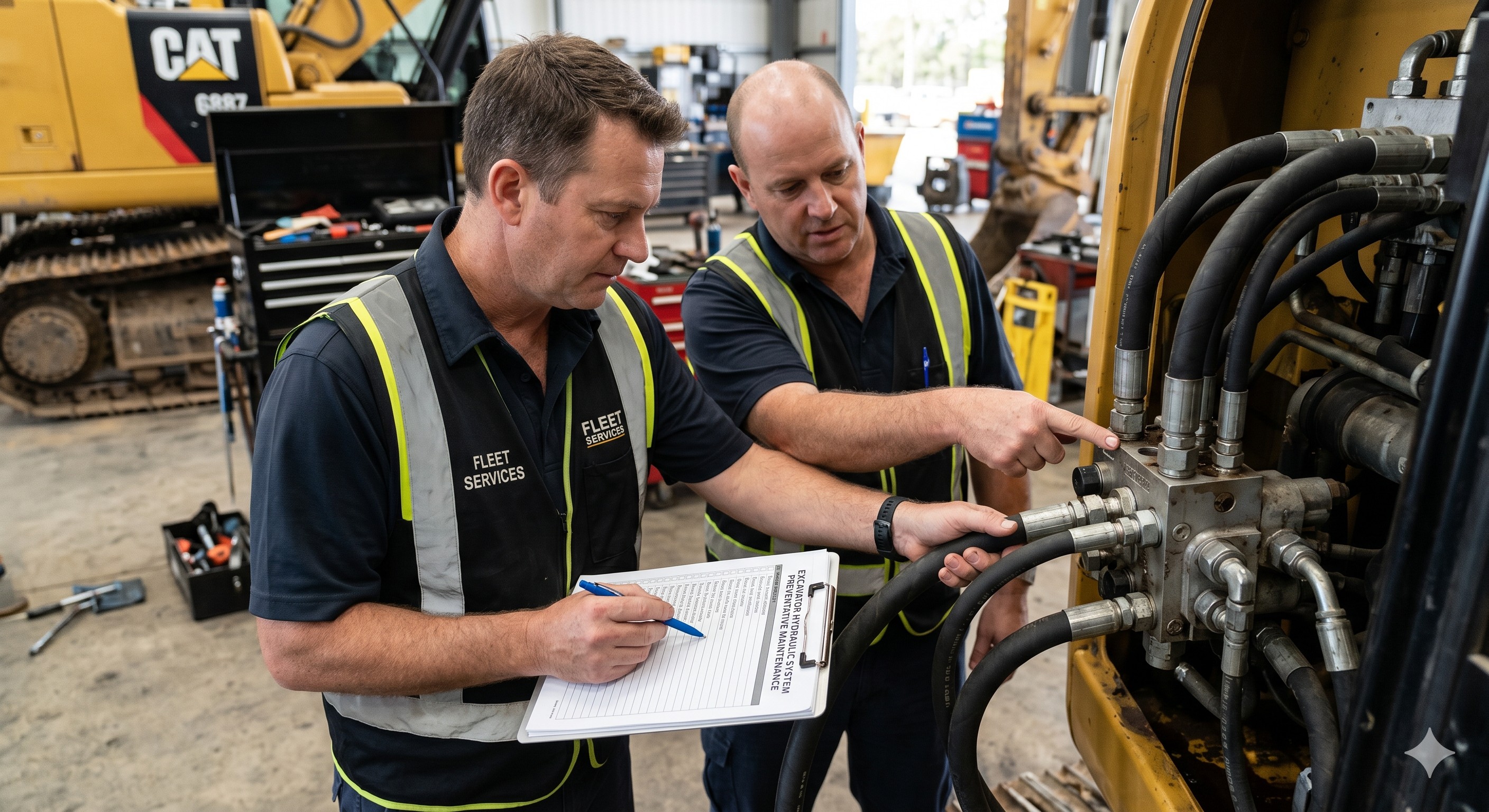
You should change hydraulic fluid in a diesel excavator every 2,000 operating hours or 12 months, whichever comes first. However, if operating in extreme ambient temperatures (below -10°C or above 35°C) or heavy duty cycle (over 70% load factor), reduce the interval to 1,500 hours. Use only ISO VG 46 or OEM-recommended hydraulic oil, and always replace the return line filter and breather filter during the change to prevent contamination.
Q3: What is the maximum payload for a 20-ton diesel excavator?
The maximum payload for a standard 20-ton diesel excavator is approximately 1,200 kg (2,645 lbs) at ground level with a standard arm length. For safe operation, never exceed 90% of the machine's rated lift capacity at the given radius and height. Payload decreases significantly when the arm is fully extended; for example, at 6 meters reach, the same 20-ton excavator may only handle 600 kg. Always consult the machine's load chart before lifting.
Q4: What engine emission standards apply to diesel excavators for European and North American markets?
Diesel excavators sold in the European Union must comply with Stage V (EU 2016/1628) emission standards, which limit particulate matter to 0.015 g/kWh and NOx to 0.4 g/kWh. For North America, the requirement is EPA Tier 4 Final, with identical PM and NOx limits. Both standards mandate a diesel particulate filter (DPF) and diesel exhaust fluid (DEF) after-treatment system. Used diesel excavators imported from outside these regions typically require retrofitting to meet local on-road or off-road emission rules.
Q5: Is a diesel excavator attachment compatible with different brands?
Yes, a diesel excavator attachment is generally compatible across brands if the mounting bracket interface meets ISO 13031 (pin grabber coupler) or ISO 13032 (manual pin connection) standards. However, hydraulic flow rate and pressure vary: most 20–25 ton excavators supply 200–250 L/min at 350 bar. Attachments such as hydraulic hammers require flow matching within 10% of the attachment's rated spec. Always verify the pin diameter, ear width, and auxiliary hydraulic circuit pressure before purchasing an attachment from a third-party manufacturer.
Q6: How long do diesel excavator undercarriage parts typically last?
Diesel excavator undercarriage components typically last 3,000 to 5,000 operating hours under normal conditions, with track chains lasting the longest and track pads wearing fastest. For heavy rock applications, track chain life can drop to 2,000 hours, while rubber pads on concrete may last 1,500 hours. Rotate tracks every 500 hours and maintain proper track tension (10–30 mm sag between bottom roller and track) to maximize life. Measure track pin and bushing internal wear with a dedicated gauge; once wear exceeds 5% of original diameter, plan for replacement.
Q7: What are the common failure signs in a diesel excavator final drive?
The most common failure signs in a diesel excavator final drive are hydraulic oil leakage from the travel motor face, abnormal grinding noises during turning, and reduced track speed under load. Early detection: check the magnetic drain plug for metal filings at each 250-hour service. If filings exceed a light paste consistency or chunks appear, internal gear or bearing damage has occurred. A second sign is the final drive housing temperature exceeding 90°C (194°F) after 30 minutes of continuous travel, measured with an infrared thermometer.
Q8: Which spare parts should every fleet keep in stock for diesel excavators?
Every fleet should keep in stock six critical diesel excavator spare parts: (1) engine oil and fuel filters (2 of each per machine), (2) one set of track shoe bolts, (3) two hydraulic hose assemblies for the bucket cylinder, (4) a full set of bucket teeth and pins, (5) a spare hydraulic pilot filter, and (6) a travel motor final drive seal kit. Stocking these reduces downtime from weeks to hours. For common 20–30 ton excavators, also store one alternator and one starter motor—these are high-failure electrical components with long lead times during peak construction seasons.